
Our
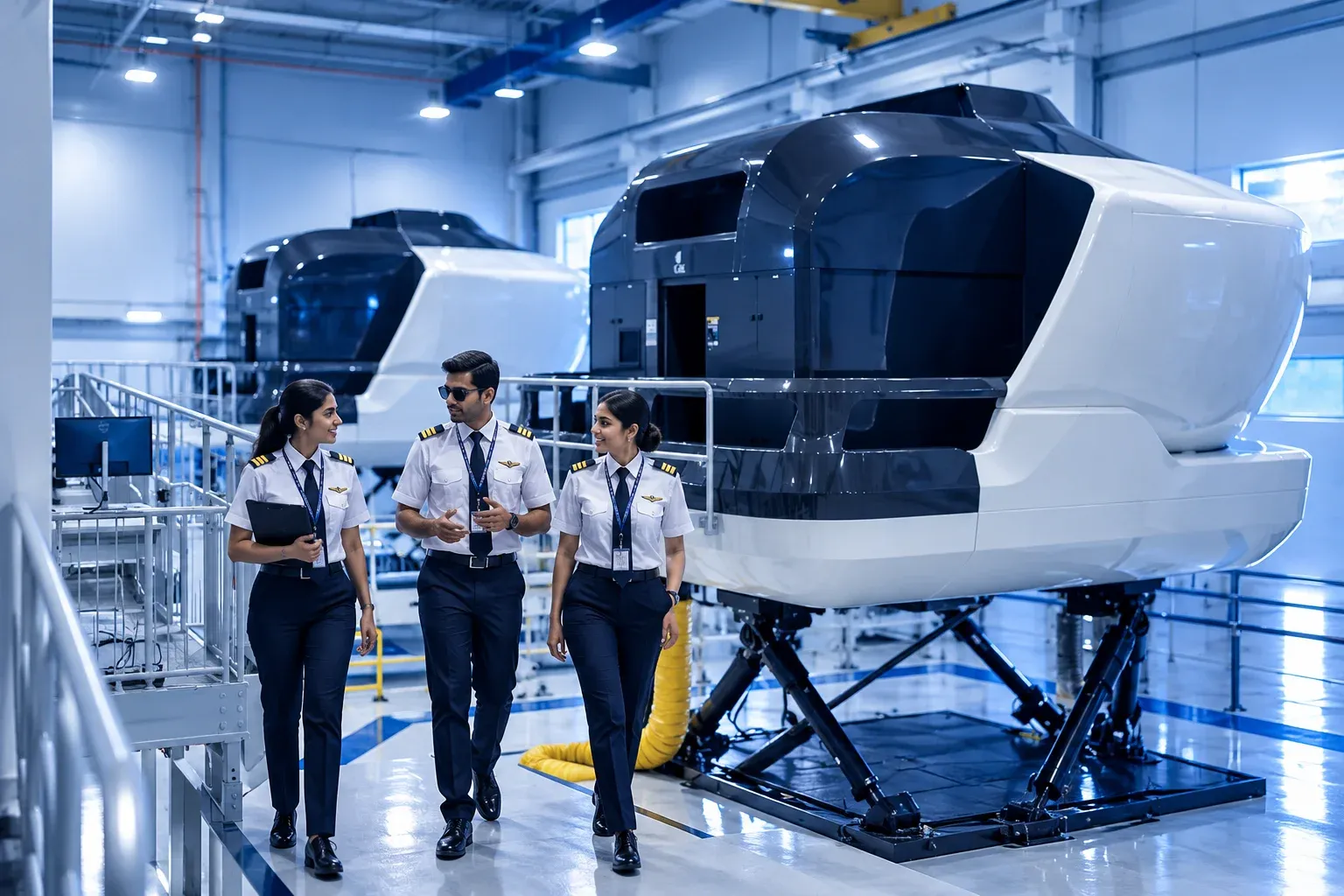
Infrastructure.Full Flight Simulation Technology.
Our Type Rating programs are designed around the applicable DGCA requirements for flight crew licensing and aircraft type qualification. The training is structured to develop the technical knowledge, procedures, operational understanding and simulator proficiency required to qualify for a specific aircraft type.
Built on a
Common Platform.One core. Every device.
Every device in our fleet is built on the same core technology platform, giving trainees a consistent, high-fidelity experience across every stage of training.
From the first fixed-base familiarisation session to the final Full Flight Simulator skill test, pilots train on systems engineered to the same standards as the commercial aircraft they will operate.
This is not a collection of disconnected machines. It is a unified training ecosystem built around the standards expected in commercial aviation.

The Full Stack Capability.Every system. Every detail. Every session.
Six core capabilities form the foundation of every training device in our fleet. Each is engineered to the same standard, operated to the same protocol, and validated to the same regulatory requirement.

Six Degrees
of Freedom
Electric motion system replicates real aircraft motion characteristics for a realistic flight experience.

4K Resolution
Visuals
COTS PC-based image generator with 4K-resolution projectors, high-definition airport models, and full atmospheric and lighting effects.

Control
Loading
Advanced digital electric Control Loading System delivers high-fidelity, realistic force-feel simulation exceeding regulatory requirements.

Instructor
Station (IOS)
Comprehensive touch-screen Instructor Operating Station enabling real-time weather injection, system malfunctions, and CBTA debrief telemetry.

Convertible
Cockpit
Rapid re-role capability supporting seamless cockpit transition between multiple aircraft families with OEM-spec instrumentation.

Custom Visual
Scenes
Hyper-accurate photogrammetric airport terrain modeling with dynamic weather, CAT-III low visibility, and runway lighting simulation.
From Systems
to Simulator
Proficiency.Theory · Practice · Assessment
Each program combines theoretical knowledge and practical simulator training. The theoretical component covers aircraft systems, performance, limitations, procedures, operations and other type-specific subjects through structured classroom and digital learning.
This is followed by practical training in a Full Flight Simulator (FFS), where pilots can practise normal operations, procedures, abnormal situations and operational scenarios in a controlled training environment.

Fixed-Base
Simulator Devices.Three devices. One standard.
A range of fixed-base devices supports early cockpit familiarisation and procedural training ahead of full-flight simulator sessions.

Training Culminates
in the DGCA
Skill Test.
Training culminates in the applicable DGCA skill test/check, conducted in accordance with the relevant regulatory requirements. The objective is to provide pilots with structured, professional and simulator-focused training that prepares them for the standards expected in commercial aviation.

Airline Veterans.
Test Pilots.
Training Specialists.10,000+ hours. OEM qualified.
Our instructors are airline veterans, test pilots, and training specialists who combine decades of operational experience with proven CBTA coaching techniques.
Each instructor is OEM qualified and undergoes continuous standardization to ensure global consistency in evaluation and delivery.
Ready to Step
Into the Cockpit?
Whether you're selecting your first aircraft type or booking simulator time for recurrent training, we're here to guide you through every step.